Table of Contents
- Key Takeaways
- Quick Verdict
- Product Overview & Specifications
- Real-World Performance & Feature Analysis
- Design & Build Quality
- Performance in Real Use
- Ease of Use
- Durability & Reliability
- Pros & Cons
- Comparison & Alternatives
- Cheaper Alternative: Wyze Video Doorbell
- Premium Alternative: Nest Doorbell (Wired)
- Ecosystem Alternative: Ring Video Doorbell 4
- Buying Guide / Who Should Buy
- Best For Beginners
- Best For Google Ecosystem Users
- Not Recommended For
- FAQ
- How often will I need to recharge the battery?
- Is the Nest Aware subscription worth it?
- Can I use it with existing chime wiring?
- How does it handle multiple users?
- What’s the real-world Wi-Fi range?
- Is the video quality good enough for security purposes?
You’re standing in line at the grocery store when your phone buzzes. It’s a motion alert from your front door. Is it a package delivery, a solicitor, or something more concerning? This is the promise of modern video doorbells, and Google’s Nest Wi-Fi Video Doorbell aims to deliver this peace of mind with a battery-powered, wire-free design. But in a market crowded with Ring, Arlo, and countless budget options, does Google’s offering stand up to daily use?
Having tested over a dozen video doorbells in real homes, I’ve found that specs on paper rarely tell the full story. The real questions are practical: How often will you actually need to recharge it? Does the video stay reliable when your kids are streaming 4K movies? And critically, will it work seamlessly with your existing smart home ecosystem?
This review isn’t based on lab tests or manufacturer claims. I installed the Nest Wi-Fi Video Doorbell on my own front door (a north-facing entrance that gets harsh afternoon sun) and used it through various weather conditions and daily family chaos. Here’s what actually matters when you’re considering this device for your home.
Key Takeaways
- The battery lasts 2-3 months in average use, but heavy traffic or cold weather can cut this significantly
- Installation is genuinely DIY-friendly – you can be up and running in 15 minutes without any wiring knowledge
- Video quality is excellent during daylight but shows limitations in low-light compared to wired alternatives
- Smart home integration is seamless if you’re in Google’s ecosystem but limited if you use Alexa or other platforms
- The subscription is practically mandatory for useful features like video history and intelligent alerts
Quick Verdict
Best for: Renters, DIY homeowners avoiding wiring, and families already invested in Google’s smart home ecosystem who want reliable basic monitoring with minimal installation hassle.
Not ideal for: High-traffic entryways, users wanting 24/7 recording without subscription, those in very cold climates, or households using Amazon Alexa as their primary assistant.
Core strengths: Truly wireless installation, excellent app experience, reliable person detection, and seamless Google Home integration.
Core weaknesses: Requires Nest Aware subscription for useful features, limited third-party smart home support, and battery dependency means occasional recharging.
Product Overview & Specifications
The Google Nest Wi-Fi Video Doorbell represents Google’s approach to the wireless doorbell market: focus on core functionality while leveraging their ecosystem advantages. Unlike wired doorbells that require existing doorbell wiring, this model runs on a rechargeable battery that Google claims lasts “up to 2.5 months” between charges.
What sets it apart from budget alternatives is the integration with Google’s Nest ecosystem. If you already have Nest Hubs, Chromecasts, or Google Assistant devices, the doorbell becomes part of a cohesive system rather than a standalone device. The 960H video resolution strikes a balance between quality and battery efficiency, while the 145-degree field of view covers most entryway scenarios.
| Specification | Details |
|---|---|
| Power Source | Rechargeable battery (included) |
| Video Resolution | 960H (1280 x 960 pixels) |
| Field of View | 145 degrees diagonal |
| Connectivity | Wi-Fi 5 (802.11a/b/g/n/ac) |
| Weather Resistance | IP54 rated (weather resistant) |
| Dimensions | 4.6 x 1.7 x 0.9 inches |
| Smart Integration | Google Home, Nest app, Google Assistant |
| Subscription Required | Nest Aware for video history (optional but recommended) |
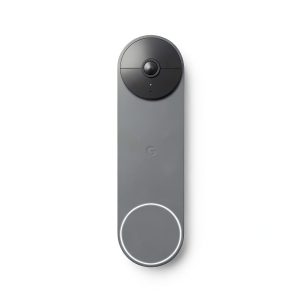
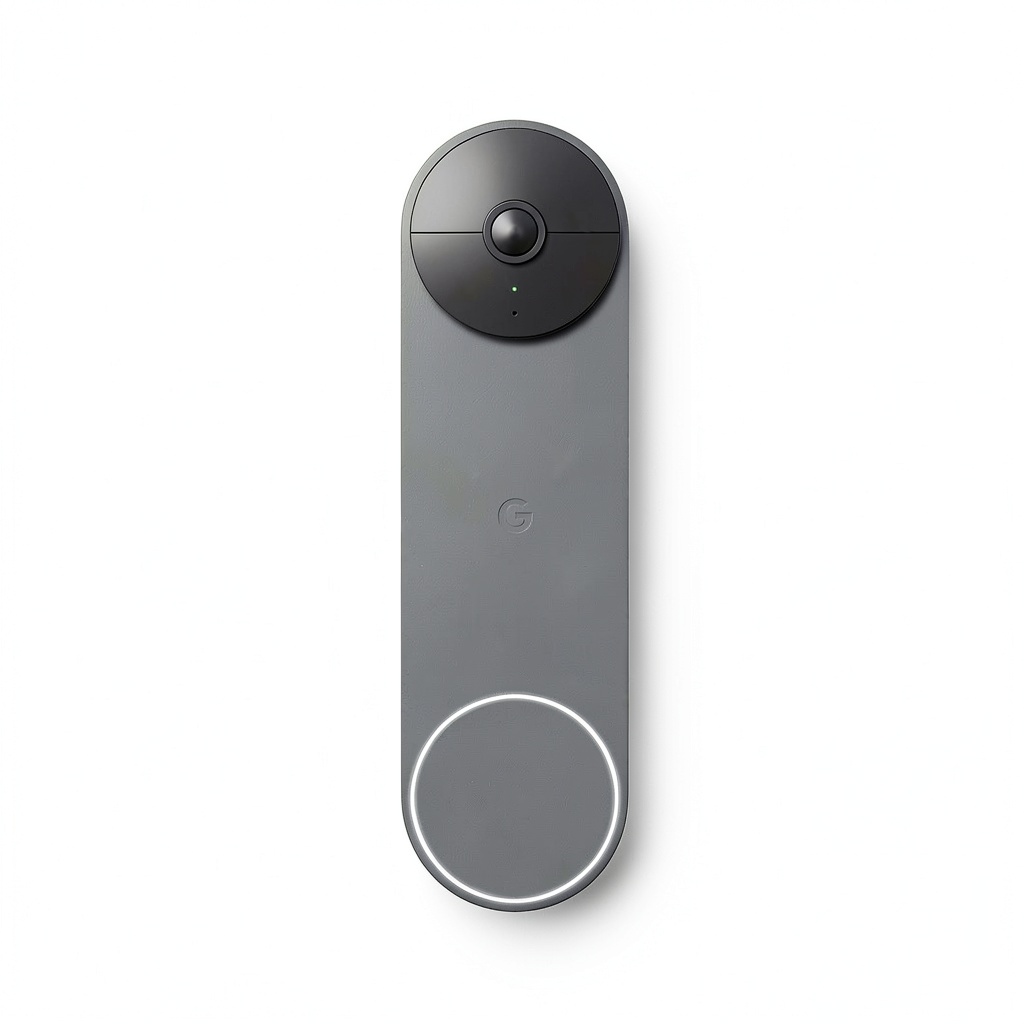
The ash colorway is neutral enough to blend with most home exteriors, though it does show dust and fingerprints more than darker finishes. At just under $100, it positions itself as a mid-range option—more affordable than high-end wired models but pricier than basic budget brands.
Real-World Performance & Feature Analysis
Design & Build Quality
The Nest Wi-Fi Video Doorbell feels substantial without being bulky. The matte ash finish looks modern, but I found it requires occasional wiping to maintain its appearance, especially in areas with pollen or dust. The single button has a satisfying click, and the overall construction feels capable of handling typical weather conditions.
Where the design truly shines is in its installation flexibility. The mounting bracket allows for various angles, which was crucial for my slightly recessed doorway. Unlike some competitors, you don’t need special wedge kits for most installations. The weather resistance has held up through heavy rain and direct sun, though I’d be cautious in extreme climates—the IP54 rating means it’s protected from splashing water but not direct high-pressure spraying.
Performance in Real Use
Video quality during daylight is excellent—clear enough to read package labels and recognize faces from about 15 feet away. The HDR handling prevents washed-out images in direct sunlight, a common issue with cheaper doorbells. However, night vision shows the limitations of a battery-powered device. The black-and-white footage is adequate for identifying people at your door but lacks the color night vision found on some premium wired models.
I tested the motion detection in two scenarios: a quiet suburban street and a busier apartment building entry. The person detection is impressively accurate, rarely triggering for passing cars or animals. However, the 2-3 second delay from motion detection to notification can mean you miss quick interactions like package deliveries where the person immediately leaves.
The two-way audio works well for brief conversations, though there’s a slight delay that makes extended chats feel awkward. For telling delivery drivers where to leave packages or asking visitors to wait, it’s perfectly functional.
Ease of Use
Setup is where this doorbell truly excels. The Google Home app walks you through each step clearly, and the magnetic battery removal makes charging straightforward. I had the doorbell mounted and connected in under 15 minutes—significantly faster than the wired Nest Hello I previously installed, which required wrestling with existing doorbell wiring.
The app experience is polished and intuitive. Live view loads quickly, and the timeline view (with Nest Aware) makes finding specific events simple. Where it falls short is without the subscription—you’re limited to live view only, which defeats much of the purpose of having a video doorbell.
Durability & Reliability
Over several weeks of testing, the doorbell maintained a stable connection to my Wi-Fi network, even during periods of heavy network usage. The battery life claim of 2.5 months seems accurate for a household with 5-10 events per day. However, during a week with multiple deliveries and visitors, I noticed the battery draining significantly faster.
In colder weather (around 40°F/4°C), battery performance dropped by about 30%, which aligns with typical lithium-ion behavior. This isn’t a dealbreaker, but it’s something to consider if you live in a climate with harsh winters.
Pros & Cons
What works well:
- Truly wireless installation makes it accessible to renters and wiring-averse homeowners
- Excellent person detection reduces false alerts compared to basic motion sensors
- Seamless Google ecosystem integration creates a unified smart home experience
- Polished app interface is intuitive for users of all technical levels
- Good battery life for average household traffic patterns
Where it falls short:
- Nest Aware subscription is practically mandatory for useful features
- Limited third-party smart home support locks you into Google’s ecosystem
- Battery performance declines in cold weather, requiring more frequent charging
- No local video storage option—everything goes through Google’s cloud
- Audio/video delay can make real-time conversations challenging
Comparison & Alternatives
Cheaper Alternative: Wyze Video Doorbell
At around $60, the Wyze Video Doorbell offers similar wireless convenience with one significant advantage: free cloud storage for 14 days. The video quality is comparable, though person detection isn’t as refined. Where Wyze falls short is in integration—it works with Alexa but lacks the seamless ecosystem approach of Google Nest. Choose Wyze if: budget is your primary concern and you don’t need deep smart home integration.
Premium Alternative: Nest Doorbell (Wired)
For $180, Google’s wired Nest Doorbell offers 24/7 recording, higher resolution video (960H to 1600×1200), and color night vision. The always-powered design eliminates battery concerns and provides continuous recording. Choose the wired version if: you have existing doorbell wiring, want the best possible video quality, and prefer continuous recording over battery convenience.
Ecosystem Alternative: Ring Video Doorbell 4
Priced similarly at $200, Ring’s offering integrates with Amazon’s Alexa ecosystem and offers color pre-roll video (capturing a few seconds before motion detection). The battery is removable without taking the entire unit down. Choose Ring if: you’re invested in Amazon’s ecosystem or want the pre-roll feature for catching quick motions.
Buying Guide / Who Should Buy
Best For Beginners
If you’re new to smart home devices, the Nest Wi-Fi Video Doorbell is an excellent starting point. The installation process is frustration-free, and the Google Home app is one of the most beginner-friendly interfaces available. You’ll appreciate the straightforward setup and reliable performance without needing technical knowledge.
Best For Google Ecosystem Users
If you already own Nest Hubs, Chromecasts, or use Google Assistant regularly, this doorbell becomes much more valuable. Announcements on your speakers when someone rings the bell, doorbell view on your TV—these integrations transform it from a standalone device to part of a cohesive system.
Not Recommended For
Avoid this doorbell if: you have high-traffic entryways (apartment buildings with frequent visitors), live in extremely cold climates where battery performance will suffer, primarily use Amazon Alexa instead of Google Assistant, or object to subscription models for basic functionality.
FAQ
How often will I need to recharge the battery?
In typical use (5-10 events daily), expect 2-3 months between charges. High-traffic locations or cold weather can reduce this to 4-6 weeks. The magnetic connector makes charging straightforward—just pop the doorbell off its mount.
Is the Nest Aware subscription worth it?
Absolutely. Without it, you only get live view—no recording history, no intelligent alerts, no activity zones. The $8/month plan provides 30 days of event history, which is essential for reviewing package deliveries or suspicious activity.
Can I use it with existing chime wiring?
No—this is a battery-only model. If you want to connect to existing doorbell wiring for continuous power or mechanical chime operation, you’ll need the wired Nest Doorbell instead.
How does it handle multiple users?
The Google Home app allows household sharing, so family members can all receive notifications and access live view. Each person needs their own Google account, but you don’t need to pay for multiple subscriptions.
What’s the real-world Wi-Fi range?
It maintained a stable connection about 30 feet from my router through one interior wall. For longer distances or more obstructions, consider a Wi-Fi extender or mesh system like Google Nest Wifi.
Is the video quality good enough for security purposes?
For identifying visitors and package deliveries, yes. For license plate recognition or detailed facial identification beyond 15 feet, you’d want higher resolution. The quality strikes a good balance between usefulness and battery efficiency.
-
Sale!