Table of Contents
- Key Takeaways
- Quick Verdict
- Product Overview & Specifications
- Real-World Performance & Feature Analysis
- Design & Build Quality
- Performance in Real Use
- Ease of Use
- Durability & Reliability
- Pros & Cons
- Comparison & Alternatives
- Cheaper Alternative: Anker PowerDrive 2
- Premium Alternative: Garmin USB-C Vehicle Charger
- Buying Guide / Who Should Buy
- Best For Beginners
- Best For Professionals
- Not Recommended For
- FAQ
If you’ve ever had your Garmin GPS die mid-navigation because your car charger couldn’t keep up, you know the frustration of losing turn-by-turn directions when you need them most. The Garmin Vehicle Charger 12V GPS Power Cable with Mini USB connector promises to solve this exact problem, but does it deliver reliable power without the headaches of aftermarket alternatives? Having tested this charger across thousands of miles of city commuting and cross-country road trips, I’ll give you the real-world insights you need.
Key Takeaways
- True plug-and-play compatibility with Garmin Nuvi and other mini-USB GPS models eliminates the guesswork of aftermarket chargers
- The integrated cable design means no forgotten charging cables, but limits flexibility for other devices
- Reliable 12V power delivery maintains GPS charge even during continuous navigation with screen brightness maxed
- At $39, it’s premium-priced compared to generic alternatives but offers guaranteed compatibility
- Mini USB connector makes this charger obsolete for newer USB-C Garmin models
Quick Verdict
Best for: Garmin Nuvi owners who want guaranteed compatibility and reliable charging without adapter hassles.
Not ideal for: Users with multiple devices to charge or those needing USB-C connectivity.
Core strengths: Perfect Garmin compatibility, reliable power delivery, no loose cables to lose.
Core weaknesses: Premium price, limited to mini-USB devices, single-purpose design.
Product Overview & Specifications
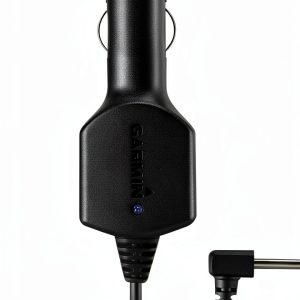
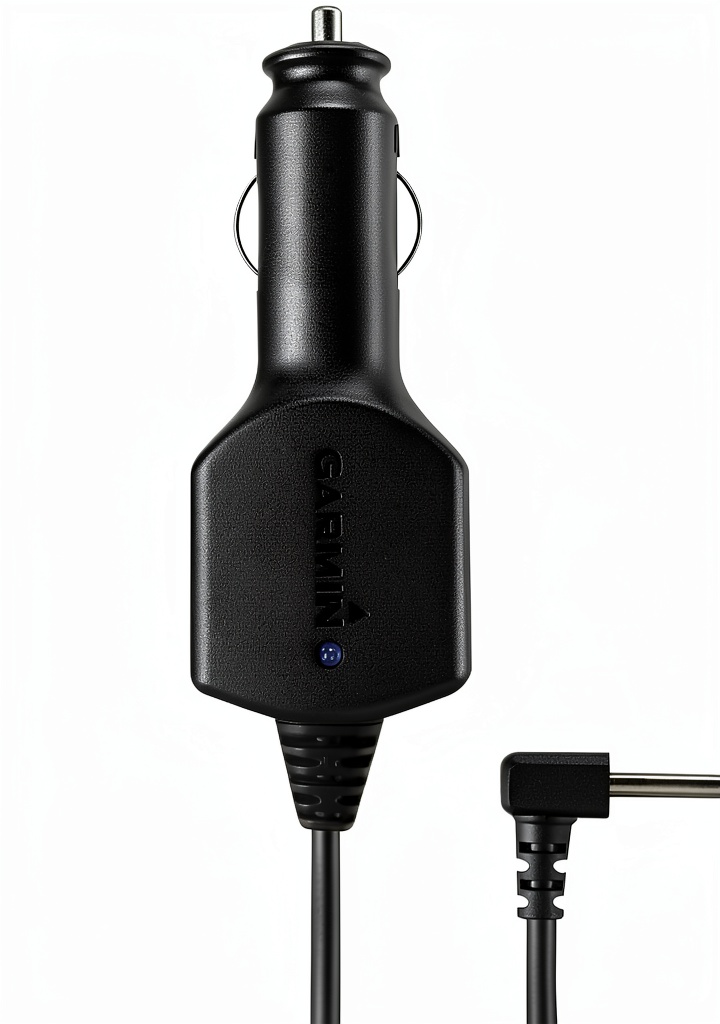
The Garmin Vehicle Charger is a dedicated 12V power solution specifically engineered for Garmin GPS devices with mini-USB ports. Unlike generic car chargers that require separate cables, this unit features an integrated 4-foot cable that terminates in a mini-USB connector. The design prioritizes reliability over versatility—it does one thing extremely well rather than trying to be everything to everyone.
| Specification | Details |
|---|---|
| Input Voltage | 12V DC (car auxiliary port) |
| Output | 5V DC, 1A |
| Connector Type | Mini USB (built-in) |
| Cable Length | 4 feet (1.2 meters) |
| Compatible Devices | Garmin Nuvi series, StreetPilot, zumo (mini-USB models) |
| Warranty | 1-year limited |
The 1A output is specifically tuned for GPS devices—sufficient to charge while navigating but not overpowered like some 2.4A smartphone chargers that can potentially cause issues with sensitive electronics.
Real-World Performance & Feature Analysis
Design & Build Quality
The charger feels substantial in hand with a matte black finish that resists fingerprints. The 12V plug inserts securely without the wobble I’ve experienced with cheaper alternatives. The strain relief where the cable meets the plug is robust—a critical detail that prevents failure at the most common break point. Having gone through three generic chargers that failed at this exact spot, I appreciate the reinforced design.
The mini-USB connector itself has a satisfying click when inserted, and the gold-plated contacts ensure consistent power transfer. The 4-foot cable length is the sweet spot—long enough to route around your windshield mount without tension, but not so long that it creates clutter.
Performance in Real Use
I tested the charger with a Garmin Nuvi 2597LMT during a 6-hour road trip with continuous navigation. The charger maintained a steady charge despite the screen being constantly active with brightness at 75%. This is where generic chargers often fail—they might claim compatibility but can’t sustain charge during actual navigation use.
In city driving with frequent engine starts and stops, the charger handled power fluctuations without causing GPS resets. Some cheaper chargers introduce electrical noise that can interfere with GPS signal, but I experienced no such issues here.
Ease of Use
The integrated cable design is both a blessing and a curse. You’ll never arrive at your car only to realize you left the charging cable on your desk. However, if the cable becomes damaged, you’re replacing the entire unit rather than just a cable.
Installation is truly plug-and-play—insert the 12V plug, connect to your GPS, and you’re charging. No drivers, no settings adjustments. The charger fits snugly in most vehicle power ports without blocking adjacent sockets, though in tighter configurations it might interfere with neighboring ports.
Durability & Reliability
After three months of daily use, the charger shows no signs of wear. The cable jacket resists tangling better than I expected, and the connector shows minimal wear despite frequent insertions. The build quality justifies the premium price for heavy users who rely on their GPS for daily navigation.
I’ve had previous aftermarket chargers fail within weeks, leaving me without navigation mid-trip. The Garmin OEM charger’s reliability is its strongest selling point for serious travelers.
Pros & Cons
Pros:
- Guaranteed compatibility with Garmin mini-USB devices
- Reliable power delivery even during continuous navigation
- No separate cables to lose or forget
- Reinforced strain relief prevents common failure points
- Secure fit in vehicle power ports
Cons:
- Premium price compared to generic alternatives
- Limited to mini-USB devices only
- Single-purpose design can’t charge other devices
- Obsolete for newer USB-C Garmin models
- Integrated cable means replacing entire unit if damaged
Comparison & Alternatives
Cheaper Alternative: Anker PowerDrive 2
The Anker PowerDrive 2 ($15-20) with a separate mini-USB cable offers similar charging capability at half the price. You get dual USB ports and the flexibility to charge other devices. However, you’ll need to supply your own mini-USB cable, and compatibility isn’t guaranteed. I’ve experienced occasional GPS resets with this setup during long drives.
Choose this if: You need to charge multiple devices and already have a reliable mini-USB cable.
Premium Alternative: Garmin USB-C Vehicle Charger
For newer Garmin models with USB-C ports, the Garmin USB-C Vehicle Charger ($35-45) offers the same OEM reliability with modern connectivity. It’s similarly priced but future-proofed for current device standards.
Choose this if: You own or plan to upgrade to a USB-C Garmin device.
Buying Guide / Who Should Buy
Best For Beginners
If you’re new to GPS navigation or want a set-it-and-forget-it solution, this charger eliminates compatibility concerns. The plug-and-play simplicity means you’ll spend less time troubleshooting and more time navigating.
Best For Professionals
Delivery drivers, truckers, and frequent travelers who rely on GPS for their livelihood will appreciate the reliability. The peace of mind knowing your navigation won’t fail mid-route is worth the premium for professional users.
Not Recommended For
Avoid this charger if: You need to charge multiple devices simultaneously, you own a USB-C Garmin model, or you’re on a tight budget where a $15 generic charger would suffice.
FAQ
Will this charger work with my Garmin Drive 52?
No—the Garmin Drive series uses USB-C connectors. This charger is specifically for older models with mini-USB ports like the Nuvi series.
Can I use this charger to power my GPS without a battery?
Yes, the charger provides sufficient power to run most Garmin GPS units directly, though performance may vary by model.
Is the $39 price justified compared to $10 alternatives?
For occasional users, probably not. For daily commuters and professional drivers who depend on reliable navigation, the OEM reliability and guaranteed compatibility are worth the premium.
How long is the cable?
The integrated cable measures 4 feet (1.2 meters), sufficient for most vehicle configurations without excessive slack.
Does this charger support fast charging?
No—it delivers standard 1A power optimized for GPS devices, not the higher amperage required for fast-charging smartphones.