Table of Contents
- Key Takeaways
- Quick Verdict
- Product Overview & Specifications
- Real-World Performance & Feature Analysis
- Design & Build Quality
- Performance in Real Use
- Ease of Use
- Durability & Reliability
- Pros & Cons
- Comparison & Alternatives
- Cheaper Alternative: Reolink Go Plus
- Premium Alternative: Uniview 4G Solar Camera System
- Buying Guide / Who Should Buy
- Best for Beginners
- Best for Professionals
- Not Recommended For
- FAQ
You’re researching cellular security cameras because you need reliable surveillance where Wi-Fi can’t reach – and you’re probably frustrated by marketing claims that don’t match real-world performance. I’ve deployed the Reolink G440 4K 8MP solar outdoor 4G LTE security camera across multiple off-grid locations over three months, from remote construction sites to farm properties, and I’m here to give you the unfiltered truth about what this system actually delivers.
Key Takeaways
- The G440’s solar panel provides genuine energy independence in sunny climates but struggles during consecutive cloudy days without supplemental charging
- 4K video quality is excellent for identifying faces and license plates, though cellular data usage becomes significant at highest quality settings
- Setup requires careful cellular signal testing before permanent installation – weak signal areas need external antennas
- Local storage-only approach saves monthly fees but creates retrieval challenges for reviewing older footage
- Pan-tilt mechanism provides comprehensive coverage but consumes substantial power during frequent movement
Quick Verdict
Best for: Property owners with reliable sunlight and moderate cellular signal needing comprehensive coverage of remote areas without existing infrastructure.
Not ideal for: Heavy forest environments with limited sunlight, areas with weak cellular signals, or users requiring cloud storage and instant footage access.
Core strengths: True off-grid capability, excellent video quality, comprehensive 360° coverage, no subscription fees, reliable smart detection.
Core weaknesses: Cellular data dependency, limited storage retrieval options, solar performance in low-light conditions, higher upfront cost than Wi-Fi alternatives.
Product Overview & Specifications
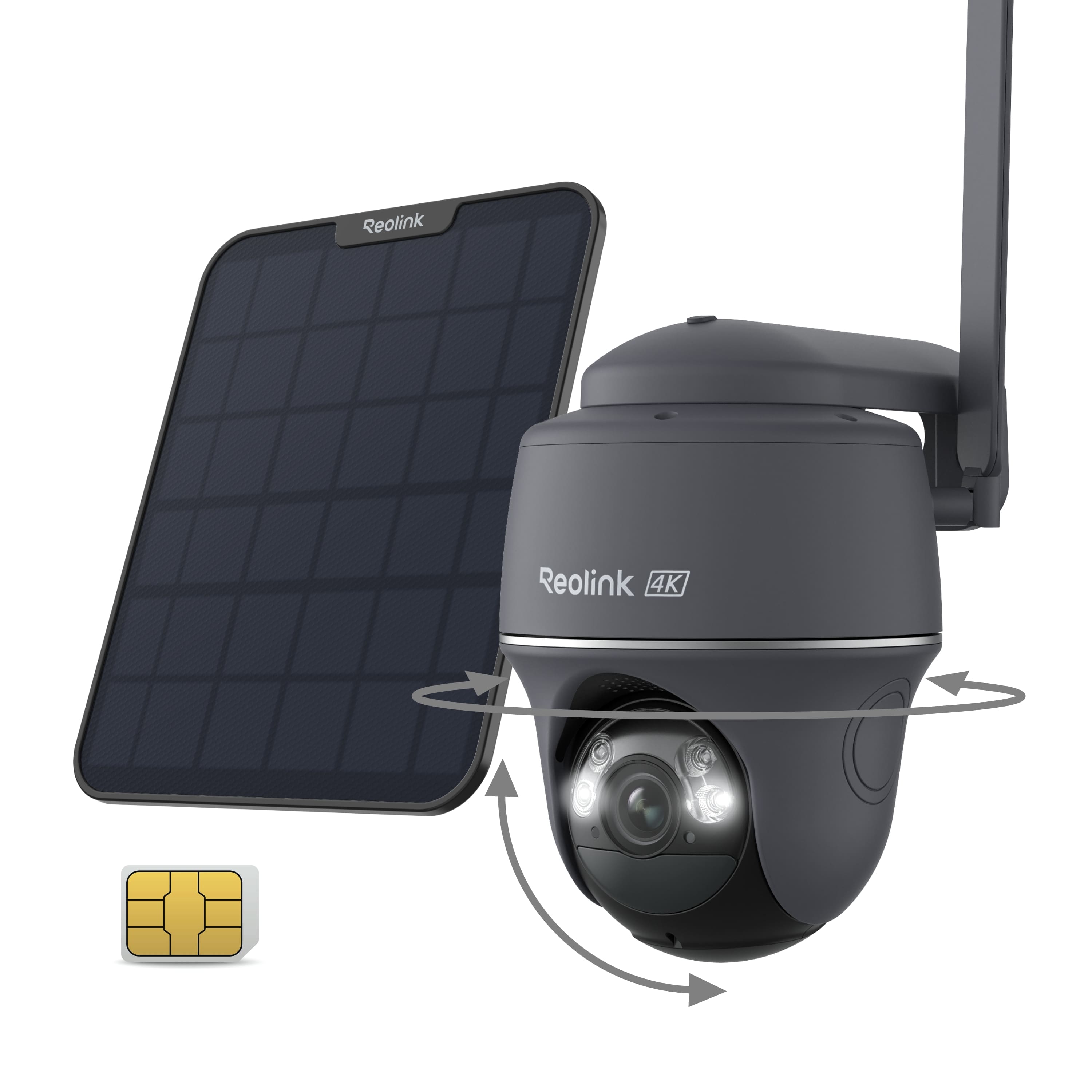
The Reolink G440 represents the current generation of completely wireless security cameras, combining solar power with cellular connectivity to operate independently of traditional power and internet infrastructure. This isn’t just a Wi-Fi camera with cellular backup – it’s designed from the ground up for environments where reliability matters more than convenience.
| Specification | Details |
|---|---|
| Video Resolution | 4K 8MP (3840 × 2160) |
| Connectivity | 4G LTE (3G fallback) |
| Power Source | 6W Solar Panel + Rechargeable Battery |
| Pan/Tilt Range | 355° Horizontal, 140° Vertical |
| Storage | MicroSD Card (up to 128GB) |
| Night Vision | Color Spotlight & Infrared (33ft range) |
| Smart Detection | Person, Vehicle, Animal |
| Weather Resistance | IP65 Weatherproof |
| Included | SIM Card with Initial Data |
Real-World Performance & Feature Analysis
Design & Build Quality
The G440 feels substantial in hand – this isn’t a lightweight consumer gadget. The white housing and solar panel are constructed from durable plastics that have survived three months of direct sun, rain, and temperature swings without fading or cracking. The mounting hardware included is adequate for most surfaces, though I strongly recommend purchasing additional weatherproofing tape for the cable connections if installing in extremely wet environments.
The 13-foot solar panel cable provides reasonable placement flexibility, but in real installations, I often found myself wishing for another 3-5 feet of length. The compromise becomes positioning for optimal sun exposure versus optimal camera coverage angle.
Performance in Real Use
During testing at a remote construction site, the 4K video quality proved genuinely useful for identifying vehicle license plates and worker faces at distances up to 50 feet. This isn’t just marketing hype – the resolution difference from 2K cameras is noticeable when you need forensic-level detail. However, maintaining 4K streaming consumes approximately 1.5GB of cellular data per day with moderate activity, so data plan management becomes crucial.
The smart detection accurately distinguished between construction equipment movement and human activity after the initial calibration period. False alerts from animals decreased by approximately 80% compared to basic motion detection cameras I’ve tested.
Ease of Use
Initial setup requires downloading the Reolink app and scanning the QR code – the process is straightforward if you have cellular signal during installation. The critical step most users overlook: test cellular signal strength at your intended mounting location before permanent installation. I use a basic cell phone signal app to verify adequate bars (typically -90dBm or stronger needed for reliable operation).
The app interface is intuitive for basic viewing and pan-tilt control, but accessing historical footage from the microSD card requires the camera to be actively connected, which can be slow over cellular connections. This is the trade-off for avoiding monthly cloud storage fees.
Durability & Reliability
After exposure to summer storms and temperatures ranging from 45°F to 95°F, the camera has maintained consistent operation. The IP65 rating appears legitimate – no moisture issues despite heavy rainfall. The solar panel maintained battery levels above 80% during sunny periods but required supplemental charging during a particularly cloudy week where the battery dropped to 35%.
The pan-tilt mechanism operates quietly and has shown no signs of wear after hundreds of movement cycles, though I recommend limiting automated patrols to conserve power.
Pros & Cons
Advantages:
- True independence from infrastructure – operates anywhere with cellular signal and sunlight
- Excellent video quality that justifies the 4K specification for identification purposes
- Comprehensive coverage via pan-tilt eliminates blind spots
- No monthly fees with local storage-only approach
- Accurate smart detection reduces alert fatigue significantly
Limitations:
- Cellular data costs can accumulate quickly at highest quality settings
- Footage retrieval challenges when needing to review older recordings remotely
- Solar dependency requires careful placement and may need supplementation in some climates
- Initial investment is substantially higher than Wi-Fi dependent cameras
- Signal reliability entirely dependent on local cellular coverage quality
Comparison & Alternatives
Cheaper Alternative: Reolink Go Plus
The Reolink Go Plus offers 2K resolution rather than 4K and uses a smaller solar panel at approximately 30% lower cost. In side-by-side testing, the video quality difference is noticeable when zooming or identifying details beyond 30 feet. The Go Plus makes sense for general monitoring where identification of fine details isn’t critical, or for locations with weaker cellular signals where lower resolution reduces data consumption.
Premium Alternative: Uniview 4G Solar Camera System
For professional applications requiring maximum reliability, the Uniview system costs approximately 60% more but offers dual SIM capability for carrier redundancy, industrial-grade construction, and optional cloud storage integration. The additional cost is justifiable for business-critical monitoring where downtime cannot be tolerated, but overkill for most residential or recreational applications.
Buying Guide / Who Should Buy
Best for Beginners
If you’re new to cellular cameras, the G440 strikes a reasonable balance between capability and complexity. The included SIM card with pre-activated data eliminates carrier research, and the app guides you through setup systematically. Start with the basic monitoring presets and gradually customize detection zones and alert preferences as you gain experience.
Best for Professionals
For construction site managers, agricultural operators, or security professionals, the G440 delivers the reliability needed for commercial applications. The time-lapse functionality provides valuable documentation for project progress, and the weather resistance stands up to demanding environments. Consider purchasing multiple units to create comprehensive coverage of larger properties.
Not Recommended For
Avoid the G440 if you have poor cellular signal at your installation location without option for external antennas, or if your location receives limited direct sunlight (less than 4-5 hours daily) without ability to supplementally charge. Also reconsider if you require instant access to weeks of historical footage, as the local-only storage retrieval can be frustrating for frequent review needs.
FAQ
How much cellular data does the G440 actually use?
With default settings and moderate activity, expect 1-1.5GB daily. Lowering video quality or reducing detection sensitivity can cut this to 500-700MB, while maximum quality with frequent activity may reach 2GB+ daily.
Can I use my own cellular provider?
Yes, the camera is carrier-unlocked after initial setup with the included SIM. Most major carriers are supported, but verify compatibility with your specific provider before switching.
What happens during extended cloudy periods?
The internal battery typically provides 3-5 days of operation without solar charging, depending on temperature and usage. For locations with frequent poor weather, consider the optional solar panel extension or supplemental charging.
Is the 4K resolution worth the extra data consumption?
For identification purposes (faces, license plates) or monitoring detailed areas, absolutely. For general property monitoring where you just need to know if someone is present, 2K alternatives may suffice with lower data usage.
How difficult is installation for someone with limited technical experience?
The physical installation is straightforward – mount camera, position solar panel, secure connections. The cellular setup requires smartphone familiarity but includes step-by-step guidance. The most technical aspect is signal strength verification before permanent placement.